Student Apartments in Germany: 5 Practical Steps to Find Your Ideal Home
Picture this: you’ve just gotten your acceptance letter from a German university, and the next big question that spikes your heart rate is where you’ll actually live.
Student apartments in Germany aren’t just a roof over your head – they’re the first taste of independence, the backdrop for late‑night study sessions, and often the place where you’ll meet the friends who become your second family.
But let’s be real, the whole process can feel like a maze. Different cities have different rules, the terminology changes from “WG” to “student dorm” and the paperwork can pile up faster than you can say “Mietvertrag.”
So, what’s the easiest way to cut through the noise? By tackling the hunt with a clear game plan and, if you’re honest with yourself, a little help from experts who know the ins and outs.
First, you need to figure out what kind of living situation matches your lifestyle. Do you crave a bustling shared flat where everyone cooks together, or do you prefer a quieter studio that feels more like a private sanctuary?
Next, consider the timing. Most universities open their housing portals in the spring, and the demand spikes dramatically in September. Missing that window can mean settling for a temporary solution that doesn’t fit their budget or study schedule.
And don’t forget the hidden costs – utilities, internet, a security deposit, and sometimes a small service fee for the student housing office. These add‑ons can surprise anyone who’s only looked at the headline rent price.
We’ve seen countless students stumble by trying to navigate this alone, only to end up with last‑minute deals that don’t fit their budget or study schedule.
That’s why a structured approach, like the four‑stage method we use at StudyInFocus, can turn a stressful scramble into a smooth transition. From planning your ideal location to securing a lease and handling the paperwork, we walk you through every step.
Imagine opening the door to a bright, fully furnished apartment just days before your orientation, feeling confident that you’ve got a safe, affordable place to call home.
Ready to stop guessing and start acting? Let’s dive in and explore how you can find the perfect student apartment in Germany without the headaches.
TL;DR
Finding the right student apartments in germany doesn’t have to be a nightmare; we break down timing, hidden costs, and housing types into a step‑by‑step plan.
Follow our proven four‑stage method, avoid common pitfalls, and secure a affordable, fully‑furnished place before orientation, so you can focus on studies and friends.
1. Identify Your Priorities and Budget
Okay, you’ve got your acceptance letter and a vague idea of what you want. The next big question is: what kind of living situation actually fits your life and wallet? Let’s break it down, step by step, so the numbers stop feeling like a scary mystery.
1️⃣ Pin down your lifestyle vibe
Do you thrive on bustling shared flats where the kitchen smells of midnight pizza, or do you need a quiet studio to focus on that thesis? Think about your daily rhythm – how many people you want around, how much privacy you crave, and whether you’d rather have a roommate who cooks or one who just watches Netflix. This little self‑audit will shape every other decision.
2️⃣ Sketch a realistic budget
Start with the headline rent you see on housing portals, but then add the hidden layers: utilities (electricity, water, heating), internet, a security deposit (usually one‑to‑three months’ rent), and any service fees the university housing office might charge. A quick spreadsheet can save you from a nasty surprise when the first bill arrives.
Tip: If you’re still figuring out exact numbers, give yourself a 10‑15% buffer. It feels safe, and you’ll thank yourself when the semester rolls around.
3️⃣ Rank location priorities
Proximity to campus, public transport links, grocery stores, and nightlife all matter, but they compete with cost. A place right next to the university might cost 20‑30% more than a well‑connected suburb. Ask yourself: would a short tram ride be worth the extra €200 a month? Write down the pros and cons – it turns an abstract feeling into a concrete list.
And remember, the farther you are, the more you’ll spend on transport. That can quickly eat into any savings you thought you’d have.
4️⃣ Factor in personal expenses
Student life isn’t just rent. You’ll need a budget for food, textbooks, occasional outings, and maybe a language course. A good rule of thumb is to allocate at least €300‑€400 for groceries and meals per month. If you love cooking, you might spend less on take‑out; if you’re a frequent explorer of city cafés, bump that number up.
Here’s a handy mental trick: take your total monthly income (including any part‑time job or family support) and subtract 50% for rent and utilities, 30% for living costs, and keep the remaining 20% for savings or emergencies. It’s not perfect, but it gives you a quick sanity check.
5️⃣ Use expert help to avoid hidden costs
Our dormitory service can walk you through the entire budgeting puzzle, from spotting extra fees in a lease to negotiating utility contracts. We’ve helped dozens of students dodge surprise costs that would otherwise drain their bank accounts.
And if you’re traveling from abroad, you’ll need to think about flights, airport transfers, and maybe a short‑term stay until your permanent place is ready. That’s where a travel partner can be handy.
For a smooth arrival, check out Wanderlust Travel USA. They specialize in helping international students plan flights and ground transport, so you won’t be stuck at the airport wondering which bus goes to your new city.
Once you’ve settled in, managing meals and grocery budgets becomes a daily habit. A simple food‑tracking app can keep you on track without feeling like a chore. FoodieCal’s photo food tracker lets you snap a picture of your dinner and instantly see how it fits into your budget.
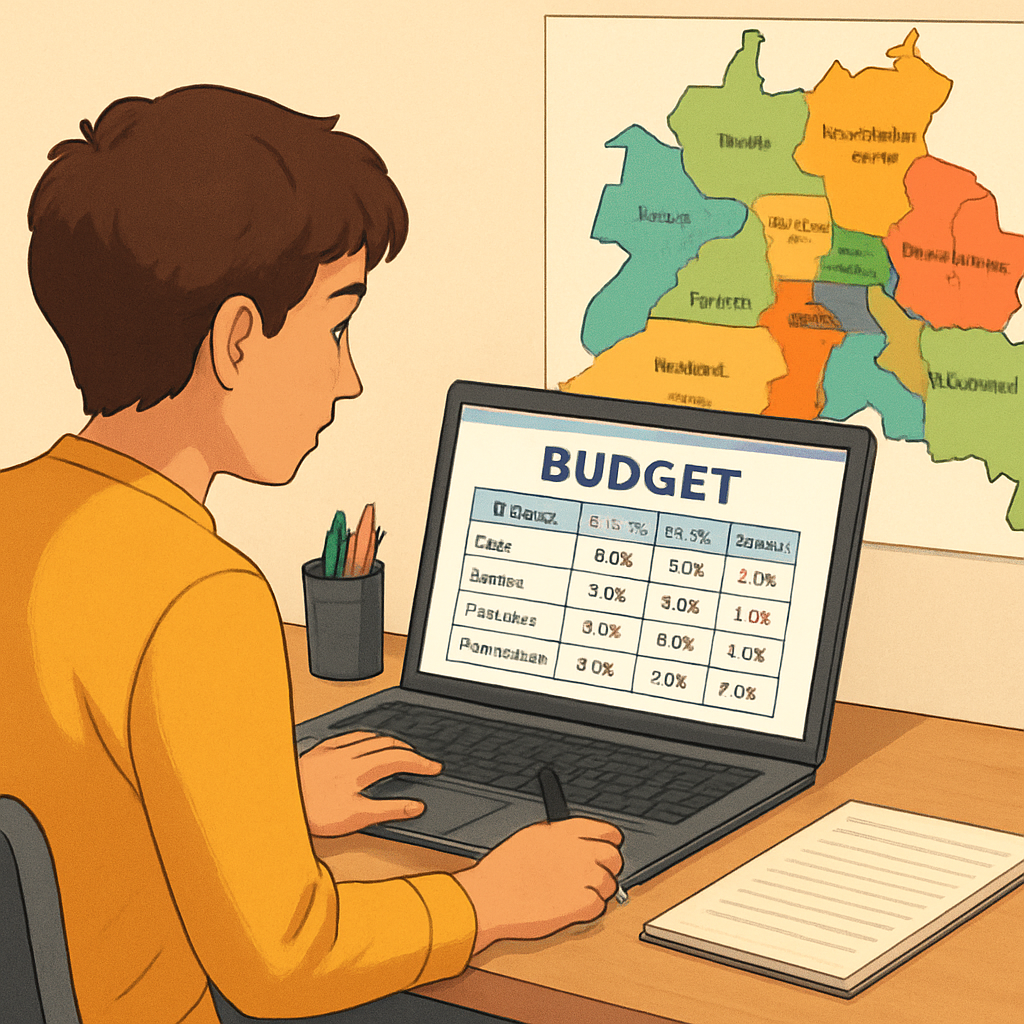
Below is a quick visual cheat‑sheet that sums up the whole process.
And if you’re a visual learner, this short video walks you through the budgeting basics, from rent calculations to choosing a neighborhood that matches your vibe.
Bottom line: knowing what you truly need, mapping every cost, and using the right support tools will turn the hunt for student apartments in Germany from a stress‑inducing sprint into a manageable marathon. Ready to crunch those numbers and lock down a place that feels like home? Let’s get those figures in line and start the search with confidence.
2. Choose the Right City and Neighborhood
Choosing a city feels like picking a new home before you even step foot on the plane – and that’s okay, because the right neighborhood can turn a cramped student apartment in germany into a place you actually look forward to coming back to.
So how do we cut through the hype and zero in on the spot that matches your budget, lifestyle, and study goals? Below is our go‑to listicle that walks you through the exact questions to ask, the data to pull, and the tiny experiments you can run before you sign a lease.
1️⃣ Proximity to Campus vs. Public Transport Options
If you can bike or walk to lectures, you’ll save on the semester ticket (often €200‑€300) and on daily coffee trips. That’s why we start by mapping the campus on Google Maps, then drawing a 15‑minute radius. In Berlin, for example, many student apartments sit in neighborhoods like Kreuzberg or Neukölln that are a short U‑Bahn ride away, yet rent stays a bit lower than the inner city.
Action step: Open the university’s “Anfahrt” page, note the nearest tram or S‑Bahn stations, and list all neighborhoods within a 10‑step zone. Then cross‑check those districts on a rental platform for price averages.
2️⃣ Cost of Living – Not Just Rent
Rent is the headline, but utilities, groceries, and leisure differ wildly. Munich’s student apartments can start at €800, while Leipzig averages €350 for a shared flat. According to Yugo’s city guide, Frankfurt is the most international hub, which often means higher dining out costs, whereas Münster’s cycling culture keeps transport cheap.
Action step: Create a simple spreadsheet with columns for rent, average utility bill, semester ticket, and a “daily spend” estimate based on local grocery prices. Aim for total housing costs under 35 % of your expected monthly stipend.
3️⃣ Student Vibe & Amenities
Every city has its own student rhythm. Berlin boasts a nonstop nightlife, Leipzig offers a café culture on every corner, and Hamburg’s “Venice of the North” vibe comes with waterfront bars and plenty of study cafés. Think about whether you need a bustling scene or a quieter nook.
Real‑world example: Sara, a psychology master’s student, chose Dresden because the “Altmarkt” area had a cluster of student cafés where she could study and meet peers, even though rent was a tad higher than in nearby Chemnitz. The extra cost paid off in networking opportunities.
Action step: Join the university’s Facebook groups or Reddit threads, ask current students what neighborhoods they recommend for your field of study, and note any recurring names.
4️⃣ Safety and Neighborhood Feel
Safety isn’t just about crime stats; it’s also about feeling comfortable walking home after a late lab. Smaller towns like Erfurt often feel safer because they have tight‑knit communities, while larger metros like Frankfurt have well‑lit public transport but can feel anonymous.
Try a virtual stroll: use Google Street View at dusk and see how many lights are on, how busy the streets look, and whether there are convenient 24‑hour stores.
5️⃣ Internship and Job Opportunities
Where you live can influence how easily you land a part‑time job or an internship. Frankfurt’s financial district, for instance, is a goldmine for business students, while Stuttgart’s automotive hub is perfect for engineering majors. Aligning your neighborhood with industry clusters can cut commute time and boost your résumé.
Action step: List the top three companies in your field that have German offices, then map the nearest public‑transport stops to those offices. Prioritize neighborhoods that sit on a direct line.
6️⃣ Test the Commute Before You Commit
Before you sign a lease, do a “trial run.” Grab a student ticket (many universities let you purchase a one‑month pass), hop on the train, and ride the route you’d take daily. Notice how crowded it gets during peak hours and whether you’d have time for a coffee break.
If the commute feels like a marathon, consider a slightly farther neighborhood with a direct line or a bike‑friendly route.
Here’s a quick checklist to wrap up this city‑choosing adventure:
- Map campus distance and transit options.
- Calculate total monthly housing cost (rent + utilities + ticket).
- Read student forums for vibe and safety tips.
- Match neighborhoods with industry hubs relevant to your major.
- Do a real‑world commute test with a temporary ticket.
Once you’ve ticked those boxes, you’ll have a shortlist of neighborhoods that feel right both on paper and in your gut. From there, the hunt for the perfect student apartments in germany becomes a focused, confidence‑filled search rather than a blind scramble.
Ready to lock in a spot? Our next step in the StudyInFocus roadmap is to turn that shortlist into a signed lease, and we’re here to guide you every pedal‑stroke of the way.
3. Use Trusted Platforms and Agencies (Video Guide)
Alright, you’ve scoped out neighborhoods, tested the commute, and you’re staring at a sea of listings that all look the same. It’s easy to feel overwhelmed, right? That’s why we swear by a handful of trusted platforms and agencies – they’re the shortcut most students wish they’d known about sooner.
1️⃣ Start with the big‑name student portals
Websites like WG‑Gesucht, Studierendenwerk, and Immobilienscout24 dominate the German student‑housing market. They aggregate everything from shared flats (WGs) to university‑run dorms, and they let you filter by “cold rent,” “warm rent,” or even “available now.” The trick is to create a focused search profile – set your max Kaltmiete, tick the “student housing” box, and enable email alerts. You’ll start getting fresh listings the moment they go live, which is crucial because prime spots disappear within hours.
Real‑world example: Lina, a psychology master’s student in Leipzig, signed up for alerts on WG‑Gesucht with a €350 ceiling. Within three days she snagged a room in a three‑person WG, saving €150 compared to the average market price. The key was acting fast and having her documents (copy of passport, proof of funds, and a short “about me” note) ready to attach.
2️⃣ Lean on university‑affiliated housing services
Every German university has a Studierendenwerk that runs its own dormitories and subsidized apartments. These are often the most budget‑friendly because utilities, internet, and heating are bundled into the Warmmiete. The downside? Demand is fierce, and waiting lists can be long. That’s why we recommend applying as early as possible – ideally three to four months before your semester starts – and submitting a “priority” request if you have a scholarship or a family situation that limits your budget.
Expert tip: When you fill out the Studierendenwerk application, include a brief paragraph explaining why you need housing now (e.g., “I’m arriving from abroad on 1 September and need to settle before orientation”). Admissions officers read every note, and a personal touch can move you up the queue.
3️⃣ Vet private agencies with a checklist
Private housing agencies can be a lifesaver if you’re looking for a fully furnished studio or a short‑term sublet. But they also come with hidden fees. Here’s a quick 5‑point checklist you can paste into a note:
- Does the agency provide a written Mietvertrag in German and English?
- Are Nebenkosten (utilities) clearly itemized?
- Is there a refundable Kaution (security deposit) of no more than three months’ cold rent?
- Can you see the flat in a live video tour before signing?
- Does the agency have a verifiable address and a positive rating on Trustpilot or Google?
If any answer is “no” or “I’m not sure,” walk away. A reputable agency will never pressure you into paying the deposit before you’ve signed a contract.
Case in point: Marco, an engineering student in Munich, used a local agency that promised a “fully furnished studio for €950.” After a quick checklist, he discovered the Nebenkosten were hidden in a separate “service fee” of €200 per month. He switched to a university‑run WG and ended up paying €800 total – a 15% saving.
4️⃣ Combine platforms for a hybrid search
Don’t put all your eggs in one basket. We advise a three‑pronged approach: (1) daily checks on WG‑Gesucht, (2) a completed Studierendenwerk application, and (3) a shortlist of two vetted agencies. By cross‑referencing listings, you’ll spot price anomalies faster and negotiate better terms.
Actionable step: Open a spreadsheet with columns for “Platform,” “Listing URL,” “Rent (Kalt/Warm),” “Deposit,” “Move‑in date,” and “Notes.” Update it every evening and highlight any row where the total monthly cost exceeds 35 % of your expected stipend. Those are the ones to drop.
5️⃣ Use the video guide to visualise the process
We’ve put together a short walkthrough that shows exactly how we set up alerts, fill out a Studierendenwerk form, and evaluate an agency contract. The video walks you through each screen, so you don’t have to guess where the “Nebenkosten” field lives. Watching it once saves hours of trial‑and‑error and helps you avoid the common pitfall of signing a lease that looks cheap on paper but balloons once utilities are added.
Bottom line: the right platforms cut your search time in half, while trusted agencies add a safety net for those who need a fully furnished place quickly. Pair them with our video guide, follow the checklist, and you’ll land a student apartment in Germany without the usual stress.
4. Understand Lease Terms and Rights
1️⃣ Break down the rent line‑item by line‑item
In Germany you’ll see two numbers on every listing: Kaltmiete (cold rent) and Warmmiete (warm rent). Kaltmiete is the bare‑bones price for the four walls. Warmmiete adds heating, water, trash collection and sometimes internet.
Action step: Open the contract and write the two figures into separate columns of your budgeting spreadsheet. Then calculate the percentage of your stipend each one takes. If Kaltmiete alone exceeds 30 % of your income, you’re probably looking at a red flag.
2️⃣ Deposit rules aren’t a negotiation trick – they’re law
German landlords must hold the security deposit (Kaution) in a blocked account and can’t ask for more than three months’ Kaltmiete. The money belongs to you and has to be returned, minus any documented damages, within a reasonable time after you move out.
Real‑world example: Lena, a master’s student in Freiburg, signed a lease that asked for a €2,500 deposit on a €800 Kaltmiete. She asked for clarification, got a revised contract for €2,400 (exactly three months), and saved €100 that would have been locked away for a year.
3️⃣ Length of lease and termination clauses
Most student leases run for 12 months with a three‑month notice period. If you need to leave earlier, the contract should spell out whether you can sublet or hand over the room to a replacement.
Tip: Highlight the termination paragraph in yellow. If it’s vague, ask the landlord to write a concrete date and the exact notice you must give. A clear clause saves you from a nasty surprise when the semester ends.
4️⃣ Nebenkosten and the Mietspiegel – your price‑check tool
Utilities (Nebenkosten) are often listed as a flat monthly amount, but they should be tied to the local rent index, the German rent index (Mietspiegel). The index shows the average rent for a given area and caps how much a landlord can raise the Warmmiete each year.
Actionable step: Look up the Mietspiegel for your city, compare it to the Warmmiete you’re being offered, and flag any increase above 10 % of that baseline. If the landlord can’t justify the jump, you have a solid ground to negotiate.
5️⃣ Your right to privacy and peaceful enjoyment
Landlords must knock and give reasonable notice before entering your flat – except in emergencies. This protects your study time and personal space.
According to tenant‑rights guides, unauthorized entry can be challenged legally, and you can even withhold rent temporarily if repairs aren’t made after written notice.Tenant privacy rights in Germany are strong, but you have to document every request.
Practical tip: Keep a simple log (date, time, reason) of any landlord visits. Send a polite email confirming the appointment – you’ll have a paper trail if anything goes sideways.
6️⃣ Subletting – a safety valve for unexpected moves
Many students discover they need to leave a semester early for an internship or a research project. A lease that allows subletting (with landlord consent) gives you flexibility and prevents you from losing a whole year’s rent.
Example: Marco, an engineering student in Munich, got a 12‑month contract with a clause that let him sublet after six months. When a six‑month internship popped up, he found a fellow student to take over his room, paid only the standard administrative fee, and avoided a €9,000 loss.
Action step: Before you sign, ask for a written sublet clause. If it’s missing, request an amendment. A clear sublet policy is worth the extra email.
Quick checklist before you click “sign”
- Separate Kalt‑ and Warm‑miete in your budget.
- Deposit ≤ 3 months’ Kaltmiete, held in a blocked account.
- Explicit termination notice period and early‑exit options.
- Nebenkosten linked to the local Mietspiegel.
- Landlord must give notice before entering – log every visit.
- Written subletting permission.
When you tick all these boxes, you turn a confusing lease into a transparent agreement. It feels less like a gamble and more like a solid foundation for your student life in Germany. If any of these points feel fuzzy, that’s the perfect moment to reach out to a housing expert – we’ve helped dozens of students decode leases without the headache.
5. Compare Options with a Quick Decision Table
Alright, you’ve already checked the lease clauses and scoped out neighborhoods. Now the big question is: which kind of student apartment in germany actually fits your life?
We get it – the market feels like a cafeteria menu with endless choices, and you don’t want to end up with a plate you can’t finish. That’s why we broke it down into a quick decision table. Scan it, spot the row that makes you nod, and you’ll have a clear direction without the analysis paralysis.
What to look for
First, ask yourself three quick questions:
- How much privacy do you need?
- What’s your budget ceiling for cold rent?
- Do you want utilities and internet bundled or prefer to handle them yourself?
Keep those answers in mind as you read the table – the “Pros” and “Cons” columns are basically a shorthand for your answers.
Here’s the table that does the heavy lifting for you:
| Housing Type | Typical Kaltmiete (€/month) | Pros | Cons |
|---|---|---|---|
| Shared WG (room in a shared flat) | 300‑400 | Low rent, built‑in community, utilities often split; easy to find sublet partners. | Less privacy, need to coordinate chores, potential noise. |
| Student Dormitory (Studierendenwerk) | 350‑500 | All‑in‑one Warmmiete, guaranteed sublet policy, student‑focused environment; often close to campus. | Application queues, limited personal space, stricter rules on guests. |
| Private Studio (independent apartment) | 500‑800 | Full privacy, you control utilities, can personalize the space. | Higher deposit, higher total cost, you’re on your own for subletting. |
Notice how the rent ranges line up with the budget question we asked earlier? If your max cold rent is €400, the shared WG row lights up. If you’re okay with a slightly higher monthly bill for the peace of mind that comes with a student dorm, the second row is your sweet spot.
Now, let’s add a bit of real‑world flavor. Maria, a master’s student in Leipzig, started in a WG because she wanted to keep costs low and make friends fast. Six months in, she realized she needed quieter evenings for research, so she switched to a Studierendenwerk dorm – the extra €100 a month paid off in study time and a hassle‑free sublet when she took a summer internship.
On the flip side, Alex, studying in Munich, knew he could afford a studio and valued having his own kitchen for cooking experiments. He paid a 3‑month deposit, but the independence meant he never had to negotiate roommate schedules again.
So, what should you do next? Take the table, plug in your personal numbers, and circle the row that ticks all the boxes. If you’re still on the fence, here’s a quick three‑step sanity check:
- Write down your absolute max cold rent.
- Mark the “Pros” that matter most (privacy, community, all‑in‑one billing).
- Cross out any “Cons” that would be a deal‑breaker (noise, long waiting lists).
If the result points to a WG, start scrolling WG‑Gesucht or the university’s housing board right now – the listings move fast. If it points to a dorm, fire off your application to the Studierendenwerk today; remember, the earlier you apply, the better your odds.
And if the studio looks like your best fit but the deposit feels scary, consider reaching out to a housing advisor. We’ve helped dozens of students negotiate deposit terms or find short‑term sublet partners, turning a big expense into a manageable step.
Bottom line: the decision table isn’t just a pretty chart – it’s a shortcut that saves you weeks of scrolling, comparing, and second‑guessing. Use it, trust your gut, and you’ll land the student apartment in germany that actually works for you.
Ready to turn that decision into a signed lease? Let’s chat – we’ll walk you through the paperwork, the sublet clause, and the deposit logistics, so you can focus on packing your bags instead of stressing over the fine print.
FAQ
What’s the difference between a WG, a dormitory, and a private studio?
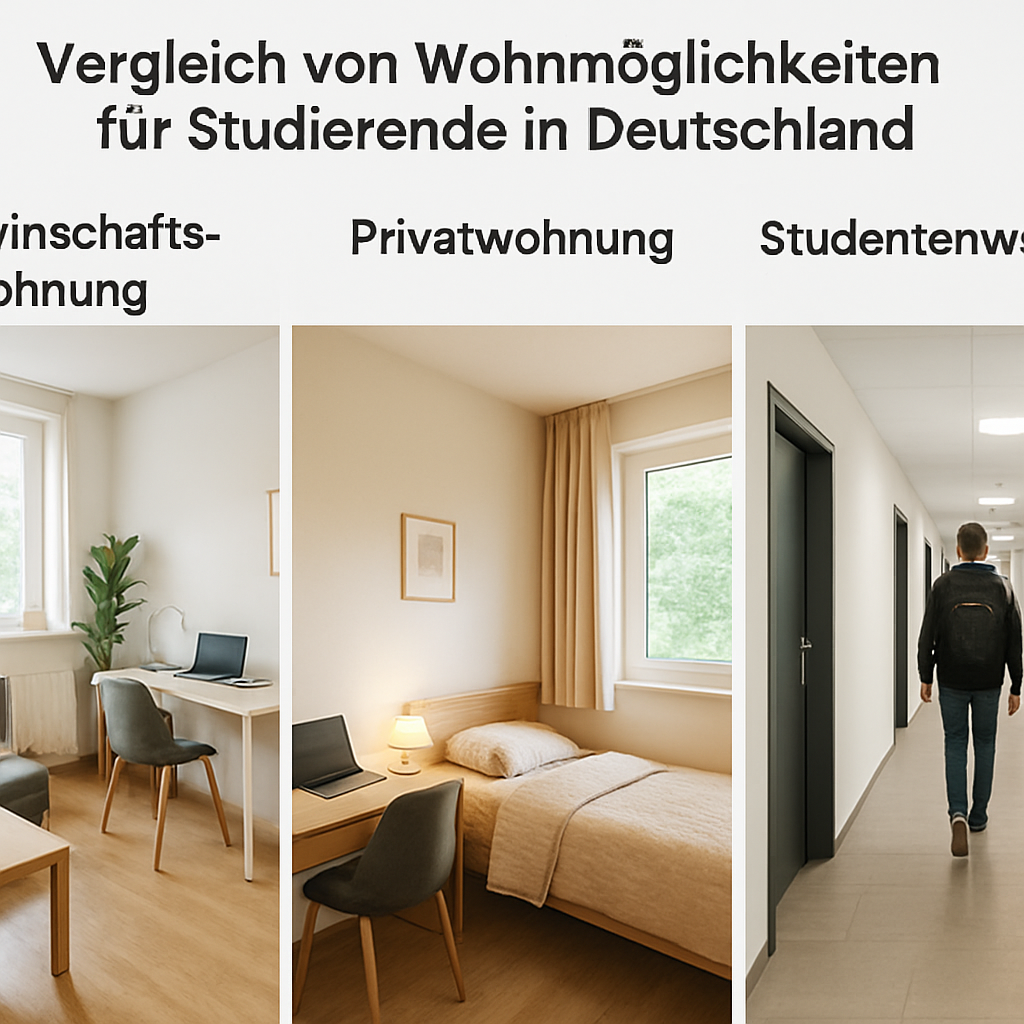
In Germany a WG (Wohngemeinschaft) is a shared flat where you rent just a room and split the kitchen, bathroom and utility bills with the other flatmates. It’s cheap, social and great if you don’t mind a little noise. A university‑run dorm (Studierendenwerk) usually offers a “all‑in‑one” Warmmiete, meaning rent, heating, water and internet come bundled, and the rules are student‑friendly. A private studio is a standalone apartment – you get total privacy, you control every bill, but you also shoulder a higher Kaltmiete and a larger deposit.
How much should I budget for utilities and internet?
Utilities (Nebenkosten) typically range from €80 to €150 per month depending on the city and the size of the flat. In bigger cities like Munich the upper end is common, while in Leipzig you might see the lower end. Internet in student housing is usually €30‑€40 a month for a basic 50 Mbps plan; many dorms already include it in the Warmmiete, which saves you the hassle of setting up a contract. Add a small buffer of €20‑€30 for occasional electricity spikes.
Can I sublet my room if I need to leave early for an internship?
Yes, most German leases allow subletting, but you need the landlord’s written consent. The key is to have a clear sublet clause in the Mietvertrag before you sign – otherwise you’ll waste time negotiating later. When you find a replacement, make sure both parties sign a simple sublet agreement that mirrors the original rent and deposit terms. This way you avoid losing a whole year’s rent and you stay on good terms with the housing office.
Is it worth applying for a Studierendenwerk dorm if I’m coming from abroad?
Absolutely. Dorms are designed for international students: they often provide multilingual staff, furnished rooms, and a community that makes the first weeks feel less lonely. Because the Warmmiete bundles everything, you won’t be surprised by hidden costs. The downside is the waiting list, so we recommend submitting the application at least three months before your semester starts. If you have a scholarship or a tight budget, mention it in the motivation letter – it can move you up the queue.
How do I protect my security deposit?
German law caps the Kaution at three months’ cold rent, and the landlord must keep it in a blocked account that you can access after you move out, minus any documented damages. Before you hand over the keys, do a thorough walk‑through with the landlord and take photos of any existing wear. Keep a checklist of the condition of walls, floors and appliances; if you leave the place as you found it, you’ll get the full deposit back, usually within six weeks.
What documents should I have ready when I apply for a WG?
Most WG listings ask for a short “about me” paragraph, a copy of your passport, proof of income or scholarship, and a SCHUFA‑like credit check if you have a German bank account. If you’re still waiting for a bank account, a letter from your university confirming your enrollment works as a temporary substitute. Having these files in PDF format and naming them clearly (e.g., “Maria_Passport.pdf”) speeds up the response time and shows you’re serious.
Should I use a housing agency, and how do I avoid hidden fees?
Agencies can be handy for fully furnished studios or short‑term sublets, but they often charge a “service fee” that looks like an extra rent line. Always ask for a written breakdown of Nebenkosten, the exact Kaution amount and whether the fee is refundable. A good rule of thumb: if the total monthly cost exceeds 35 % of your expected stipend, walk away and look for a WG or dorm instead. Trust your gut – if something feels rushed, it probably is.
Conclusion
We've walked through everything from budgeting your rent to checking lease terms, and now you know how to turn the maze of student apartments in germany into a manageable checklist.
Remember the three‑step loop that kept working: set a hard rent ceiling, match your must‑have amenities, and test the commute before you sign. If any number feels off, pause – it’s cheaper to walk away than to get stuck with a surprise Nebenkosten bill later.
Key takeaways
- Cold rent should stay around 30‑35 % of your monthly stipend.
- Always ask for a written breakdown of Nebenkosten and verify the Kaution doesn’t exceed three months’ cold rent.
- Use trusted platforms like WG‑Gesucht and your university’s Studierendenwerk, but keep a quick spreadsheet to spot price outliers.
And don’t forget the human side: a flat where you feel welcome will make study life way smoother. If you’re still unsure which option fits your budget and lifestyle, a short call with us can map out a personalized plan.
So, what’s your next move? Grab that spreadsheet, reach out for a free housing strategy session, and let’s get you settled in a student apartment in germany you can actually enjoy.
Остались вопросы? Запишитесь на Консультацию!
Получите ответы на ваши вопросы на индивидуальной онлайн консультации с нашим специалистом
Записаться!