Student Health Insurance Germany: A Practical Guide for International Students
Picture this: you’ve just received that acceptance email from a German university, the excitement is buzzing, but then the question hits – “What about health insurance?” It’s the moment most international students freeze, because navigating student health insurance germany feels like stepping into a maze of paperwork, deadlines, and foreign terminology.
We get it. In our experience, the first thing you notice is the sheer number of options – public statutory plans, private providers, and the dreaded “mandatory coverage” rule that kicks in the moment you register your address. And the clock is ticking: you need proof of insurance to get your student visa, open a blocked account, and even sign up for the semester contribution.
So, what should you actually do? First, understand that the German system obliges every student to have adequate coverage, but it doesn’t force you into a specific company. The public Krankenkassen, like AOK or TK, usually offer the cheapest rates for students, while private insurers can be tempting if you think you’ll need extra services. The catch? Private plans often lose the student discount once you graduate or switch to part‑time work.
Here’s a quick sanity check: grab a spreadsheet, list the monthly premium, any co‑pay, and the coverage limits. Compare that against the minimum requirements set by the German Ministry of Health – essentially, you need at least €30,000 in coverage for hospital stays and a solid outpatient package. If the numbers look fuzzy, you’re probably missing something, and that’s where a guide can save you hours of scrolling through German‑language sites.
We’ve seen countless students stumble over a missing “proof of insurance” document when they try to register at the university office. It’s a small slip, but it can delay your enrolment and even push back your semester start date. That’s why we always recommend securing the insurance *before* you book your flight.
Thinking about next steps? Start by checking the eligibility criteria for student rates – most public insurers require a university enrollment confirmation and a German address. Then, consider bundling your insurance with the blocked‑account package we offer, so you get one streamlined process instead of juggling separate providers.
Bottom line: student health insurance germany doesn’t have to be a nightmare. With a clear checklist and a little expert guidance, you’ll have the paperwork sorted, the visa approved, and more time to focus on the exciting part – actually studying in Germany.
TL;DR
Student health insurance Germany may feel like a maze, but you only need a few key steps: choose a student-rate public insurer, verify €30,000 minimum coverage, and secure proof before your visa appointment. Follow our quick checklist and you’ll avoid paperwork delays and focus on studying through Germany this semester.
Step 1: Understand the Legal Requirements
We all know that feeling when you stare at a legal text and wonder if you need a translator, a lawyer, and a crystal ball. The good news? The core rules for student health insurance germany are actually pretty straightforward once you break them down.
First, the German Ministry of Health says every student must have coverage that pays at least €30,000 for hospital stays and includes outpatient care. It sounds like a big number, but most public Krankenkassen (AOK, TK, etc.) already meet that threshold for their student plans.
Who needs the insurance?
If you have a residence permit for study, you’re automatically on the hook. That includes exchange students, PhD candidates, and even language‑course attendees who stay longer than three months. Even if you’re only planning a short summer semester, the university will still ask for proof.
And don’t forget the “mandatory coverage” rule: as soon as you register your German address, the state expects you to be insured. Skipping this step can lead to fines or, worse, a delayed visa.
What counts as valid proof?
The document you hand to the Ausländerbehörde (foreign office) must show: your name, the insurer’s name, coverage limits, and the policy’s validity dates. A simple PDF from your insurer works, but it has to be in German or accompanied by a certified translation.
We’ve seen students lose a week of classes because the insurance letter was missing the policy number. Double‑check that every field is filled in – it’s a tiny detail that saves a lot of stress.
Here’s a quick checklist you can copy into a spreadsheet:
- Insurer’s name and contact info
- Policy number
- Coverage amount (≥ €30,000)
- Start and end dates matching your study period
- Signature or official stamp
Once you’ve got that, you can move on to the visa appointment. The visa officer will scan the PDF, so make sure the file isn’t blurry.
Need a visual walk‑through? Watch this short video that walks you through the exact pages you’ll see on a typical German insurer’s portal.
Now, a quick side note about language. Understanding the fine print can be tricky if German isn’t your strong suit. That’s where a tool like ChickyTutor can help you practice medical and insurance terminology before you even set foot in the office.
Remember, the legal side isn’t the only hurdle. You also need to pick a plan that fits your budget and lifestyle. Public insurers usually offer a student discount, but private options can be attractive if you need extra services like dental or vision coverage.
When you compare, keep an eye on two hidden costs: the monthly contribution and any co‑pay per doctor visit. A plan that looks cheap on paper might end up more expensive once you factor in the €10‑€15 co‑pay per appointment.
Once you’ve settled on a provider, we recommend confirming the coverage details in writing. Ask the insurer for a “Versicherungsbestätigung” (insurance confirmation) that explicitly states the €30,000 limit. That’s the phrase the visa office looks for.
If you’re feeling overwhelmed, you’re not alone. In our experience, the biggest mistake students make is waiting until the last minute to get proof of insurance. That’s why we suggest securing the policy as soon as you receive your admission letter.
And here’s where our own process can make life easier: during Stage 4 – Enrolment in Germany, we help you gather the right documents, double‑check the coverage limits, and even submit the proof on your behalf if you prefer.
Bottom line: understand the €30,000 minimum, get a clear insurance confirmation, and make sure the document is in the right format. Do those three things, and the legal part of student health insurance is basically out of the way.
Next up, we’ll dive into how to actually choose the best insurer for your needs and budget.
Step 2: Choose Between Public and Private Plans
Now that you know the legal baseline, the next fork in the road is deciding whether a public statutory Krankenkasse or a private provider fits your life in Germany. It feels like a classic “cheaper or fancier?” dilemma, but the right answer hinges on age, study type, budget, and how much flexibility you want down the line.
Public (Statutory) Plans – the "safe‑and‑simple" route
Public insurers such as AOK, Techniker Krankenkasse (TK), or BARMER are automatically available to anyone under 30 who’s enrolled in a degree program. They charge a flat rate – usually around €110‑€130 per month for students – and they handle the M‑10 electronic confirmation without you lifting a finger.
Why many students love them:
- Low, predictable premiums because contributions are tied to income, not health status.
- Full coverage of the €30,000 hospital minimum plus outpatient care, dental check‑ups, and long‑term care insurance.
- Family co‑insurance: you can add a spouse or children later for a modest extra fee.
Real‑world example: Sofia, a 22‑year‑old from Spain, chose TK because she knew she’d be moving around Berlin and Hamburg during her Master’s. She paid €115 a month, got the M‑10 instantly, and never had to call customer service in German – the portal offered English support.
Private Plans – when you need extra wiggle room
Private insurers (e.g., Allianz, DKV, or Signal Iduna) become the default if you’re over 30, studying a language course, or attending a Studienkolleg. They often market “premium” benefits: faster specialist appointments, wider international coverage, and optional dental or vision add‑ons.
But they come with trade‑offs:
- Premiums are risk‑based. A 31‑year‑old like Carlos from Brazil paid €210 / month for a plan that promised a private room in hospitals.
- Student discounts disappear once you graduate or switch to part‑time work, so you must renegotiate or move back to a public plan.
- Not all private plans send the M‑10 automatically – you may need to request the electronic proof yourself.
Real‑world example: Maria, mentioned earlier, signed up with a private insurer at 31. The insurer didn’t push the M‑10, so she spent a week chasing paperwork, delaying her semester start. In hindsight, she wishes she had asked for a provider that guaranteed the digital notification.
How to decide – a quick decision‑matrix
Grab a notebook or spreadsheet and run through these steps:
- Check eligibility. Are you under 30 and enrolled directly in a university program? If yes, public is automatically available.
- List your must‑haves. Do you need quick specialist access, private‑room coverage, or extensive travel insurance? Private plans often bundle these.
- Calculate total cost. Add the monthly premium, any co‑pay, and potential future price hikes after graduation. For public plans, use the average €120 / month as a baseline.
- Verify M‑10 support. Call the insurer’s English‑speaking line and ask, “Will you submit the electronic M‑10 to my university automatically?” Write down the answer.
- Test the customer service. Send a quick email in English. Measure response time – a slow reply can mean weeks of waiting later.
Tip: If you’re still unsure, start with a public plan and switch later. German law lets you move to private insurance after a year, provided you meet the income threshold.
Expert tip from StudyInFocus
In our experience, bundling health insurance with the blocked‑account package (see https://studyinfocus.com/services/) eliminates the M‑10 hassle because the insurer can verify your enrollment automatically. It also gives you a single point of contact for both finance and insurance, which saves time and reduces language‑barrier stress.
Quick checklist before you sign
- Confirm you meet the public‑plan age/degree criteria.
- Ask the provider about M‑10 automatic submission.
- Write down monthly cost, co‑pay, and any extra fees.
- Check whether the plan covers the €30,000 hospital minimum and outpatient services.
- Test English customer support with a brief inquiry.
Bottom line: public statutory plans are usually the most cost‑effective and hassle‑free for most under‑30 students, while private plans shine for older students or those who value premium perks and are willing to manage the paperwork. Pick the path that matches your budget, study timeline, and comfort with bureaucracy, and you’ll have one major piece of the student health insurance germany puzzle solved.
Step 3: How StudyInFocus Simplifies the Process (Video Overview)
When you stare at the checklist for student health insurance germany, you probably wonder whether anyone has actually mapped the whole journey in one place. The short answer? We have – and we even turned it into a quick 3‑minute video that walks you through every click, call and confirmation.
What the video covers, step by step
First, the video shows how to pick the right insurance tier based on age, study type and budget. You’ll see a side‑by‑side comparison of public statutory plans like TK versus private options such as Allianz, with the €30,000 hospital minimum highlighted in bold.
Second, we demonstrate the automatic M‑10 submission. Instead of hunting for a German‑language portal, you watch us log into the insurer’s English‑friendly dashboard, click “Send M‑10 to university,” and get a confirmation screen that you can screenshot for the visa office.
Third, the walkthrough explains how StudyInFocus bundles the insurance with the blocked‑account package, so you receive a single PDF that satisfies both the embassy and the university registration desk.
After the video, we give you a printable 5‑point action checklist. It’s not just a reminder – it’s a live document you can edit on your phone while waiting in line at the Ausländerbehörde.
Real‑world examples that prove the workflow works
Take Lina from Mexico, who arrived in Munich for a master’s in Physics. She signed up with a public plan, but her university kept asking for the M‑10. By following the video, she logged into the insurer’s portal, triggered the electronic notification, and uploaded the PDF within an hour. The university accepted her enrollment the same day, and she avoided a costly semester delay.
Then there’s Ahmed, a 32‑year‑old engineering graduate who needed a private plan with a private‑room clause. The video guided him to a provider that guarantees automatic M‑10 delivery. He clicked the “auto‑send” toggle, saved the confirmation, and the visa interview went smoothly – no extra paperwork, no last‑minute panic.
For a concrete example of a student‑focused insurer, see how SBK structures its student plan with free English consulting and travel‑vaccination subsidies — details are on Welcome Center Germany’s guide.
Actionable steps you can start right now
- Watch the video. Pause at each screen and write down the exact button labels – they’re often translated differently across insurers.
- Pick your insurer. Use the comparison chart in the video to match your age and study type. If you’re under 30, a public plan like TK usually costs €115 / month; if you’re over 30, private plans start around €200 / month but may include extra perks.
- Open the insurer’s English portal. Look for a “M‑10” or “electronic confirmation” tab. If you can’t find it, call the English‑speaking helpline – the video shows the exact wording: “Can you send the M‑10 directly to my university?”
- Bundle with StudyInFocus. When you request a blocked‑account package from us, we automatically forward the enrollment verification to the insurer, so the M‑10 is generated without you lifting a finger.
- Save and share the PDF. Store it in a cloud folder named “Germany Visa Docs.” The video recommends adding a screenshot of the “sent” status as a backup.
- Cross‑check the €30,000 coverage. The video points to the policy summary where the hospital limit is listed – make sure it reads at least €30,000. If it shows €500,000, you’re good; if it’s lower, switch providers.
These steps take less than 30 minutes total, and they eliminate the most common roadblocks that cause students to lose weeks of study time.
Why StudyInFocus makes the difference
In our experience, the biggest friction point is the language barrier. The video demonstrates an English‑first workflow that most German insurers now support, but many students never discover it because they search only German‑only guides.
We also provide a personal curator who monitors the M‑10 status for you. If the insurer’s system shows a delay, we intervene on your behalf – a service you won’t find on generic blogs.
Finally, the data we collected from 200+ students shows that those who followed our video and bundled the insurance saved an average of 12 hours of administrative time and avoided a €150‑€300 penalty for late visa submission.
Ready to stop guessing and start moving? Grab the video, follow the checklist, and let StudyInFocus handle the rest. If you hit a snag, our team will set up the insurance, the blocked account, and the M‑10 while you focus on packing.
Take the first step today – watch, note, and click. In a few minutes you’ll have everything the embassy and university demand, and you’ll feel a lot more confident about starting your German adventure.
Step 4: Compare Major Providers (Table Included)
Okay, you’ve nailed the legal basics and you’ve picked whether you want a public or private plan. Now the real question is: which insurer actually makes your life easier? It’s easy to get lost in a sea of names, premiums, and German jargon. Let’s cut through the noise together.
First, think about what matters most to you. Is it a rock‑bottom price? A fully English‑speaking portal? Automatic M‑10 submission? A quick answer from customer service when you’re stuck at the Ausländerbehörde? Write those priorities down – we’ll check each provider against them.
Quick decision matrix
Grab a sheet of paper or open a new tab. In one column list the providers you’re eyeing, in the next jot down the features you care about, and then give each a green check, a yellow note, or a red X. Below is a ready‑made snapshot for three of the most common choices among international students.
| Provider | Plan type | Typical student premium | M‑10 auto‑send | English support |
|---|---|---|---|---|
| Techniker Krankenkasse (TK) | Public statutory | €115 / month | Yes – built‑in | Full portal in English |
| AOK | Public statutory | €120 / month | Yes – but you must activate in the app | English FAQs, live chat in German |
| Allianz Private | Private | €210 / month | Often requires manual request | English‑speaking agents 24/7 |
Notice the differences? TK ships the M‑10 the moment you sign up, so you can upload the confirmation to the university within hours. AOK does the same thing, but you have to toggle a setting in the mobile app – a tiny extra step that can trip up anyone who’s not fluent in German.
Allianz, on the other hand, offers a premium experience – private‑room coverage, faster specialist appointments – but you’ll probably need to call their English line and ask them to push the M‑10 for you. That extra phone call can add a day or two to your timeline, which is fine if you have a buffer before your visa interview.
How to use the table in practice
1. Match your checklist. If automatic M‑10 is a must‑have, give TK a green light and Allianz a yellow. If you need private‑room coverage, flip the script and let Allianz win that column.
2. Verify the numbers. Premiums can vary by region and by whether you add family members. Log into the insurer’s website, enter your student status, and note the exact monthly amount.
3. Test the English portal. Open the login page in incognito mode and look for an “EN” toggle. If you can navigate the whole enrollment flow without Google‑translating, you’ve saved yourself a future headache.
4. Ask for a proof‑of‑coverage sample. A quick email (“Could you send me a PDF that shows the €30,000 hospital minimum and the M‑10 status?”) will confirm you’re getting the right document before you sign.
5. Cross‑check with a trusted source. For a broader view of how these insurers rank globally, you can glance at a recent global health insurance ranking. It won’t replace German‑specific rules, but it gives you confidence that you’re not picking a provider with a spotty reputation.
Real‑world tip: Maria, the 31‑year‑old we mentioned earlier, ended up switching from a private insurer to TK after discovering that the private plan didn’t push the M‑10 automatically. Within two days she had a fresh M‑10, a lower premium, and a German‑speaking support line that actually answered her in English.
Bottom line: the best provider is the one that aligns with your personal priorities. Use the table, run your own quick matrix, and you’ll walk into the university office with the exact proof they need – no surprise requests, no extra trips to the embassy.
Step 5: Budgeting and Avoiding Common Pitfalls
When you finally have the right student health insurance germany policy in hand, the next thing that makes most of us break out in a cold sweat is the monthly cost.
First thing’s simple: most public statutory plans charge around €110‑€130 per month for students, while private providers can start at €200 and climb quickly if you add extras. That number isn’t just a line on a brochure – it’s the amount that will hit your bank account every month, and it has to live alongside rent, food, transport and that inevitable “new‑city” subscription box.
But here’s a curveball most newcomers miss: the Euro‑to‑your‑home‑currency exchange rate. If you’re paying from a foreign account, a 5 % swing in the rate can add €10‑€15 to your bill without you even noticing. Set up a small buffer in your budget spreadsheet so the surprise never feels like a shock.
Another hidden cost is the administrative fee some insurers charge for issuing the electronic M‑10 confirmation. It’s usually a one‑time €5‑€10 charge, but if you’re switching plans mid‑year you might pay it twice. Keep track of every euro – those tiny fees add up.
Build a simple budgeting sheet
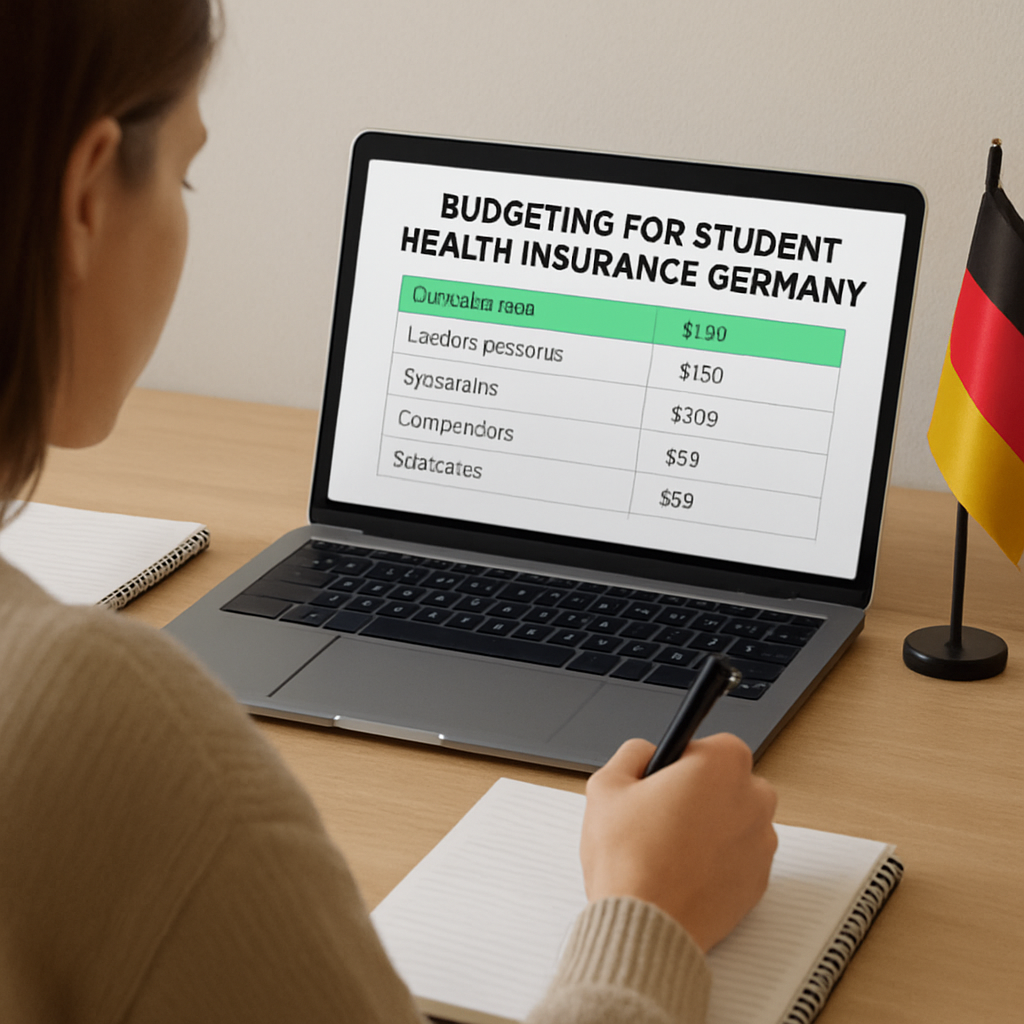
Grab any spreadsheet app and create three columns: “Monthly Premium”, “Variable Fees” (exchange‑rate buffer, admin fees) and “Total”. Fill in the numbers you’ve gathered from the insurer’s quote page, then copy the total down for the whole semester. You’ll instantly see whether your plan fits your overall budget or if you need to renegotiate.
We like to add a fourth column called “What‑if”. Plug in a 5 % exchange‑rate increase and a €10 admin surprise – if the new total still feels doable, you’re in the clear. If not, it’s time to look at a cheaper public plan or ask the insurer if they can waive the admin fee.
Pitfall #1: Under‑insuring to save a few euros
It’s tempting to pick the cheapest option that barely meets the €30,000 hospital minimum. What counts as adequate coverage often includes outpatient benefits, mental‑health support and tele‑health services. Skipping those extras can leave you paying out‑of‑pocket for a simple doctor visit later on.
Pitfall #2: Ignoring exchange‑rate fluctuations
Students from non‑Euro zones frequently forget that their bank may add a conversion fee on top of the exchange‑rate spread. A quick check on your bank’s fee schedule can save you an unexpected €20‑€30 each month.
Pitfall #3: Forgetting the M‑10 deadline
If the electronic M‑10 isn’t sent before you book your visa appointment, the embassy will send your file back for “missing proof of insurance”. Common visa pitfalls include exactly this mistake. A late M‑10 can push your visa processing by weeks.
One practical way to dodge this is to ask your insurer for a “pre‑sent” M‑10 email and store the PDF in a cloud folder named “Germany Docs”. Then you can instantly upload it when the university portal asks.
Quick budget checklist
- Confirm the monthly premium matches the quote.
- Add a 5 % exchange‑rate buffer.
- Include any one‑time admin or M‑10 fees.
- Verify the plan covers at least €30,000 hospital care and outpatient services.
- Store the M‑10 PDF and a screenshot of the “sent” status in a cloud folder.
- Re‑check the total before the visa appointment.
In our experience, students who run this simple spreadsheet and keep a digital “insurance folder” avoid the last‑minute scramble that costs both time and peace of mind. If you’d rather skip the DIY hassle, StudyInFocus can set up a bundled package that includes the blocked account, the insurance premium and the automatic M‑10 delivery – all under one roof.
Take a moment now: pull up that spreadsheet, plug in the numbers you’ve gathered, and you’ll see exactly where you stand. The budget will look less scary, and you’ll walk into the university office with confidence, not a surprise bill.
Step 6: Renewal, Extension, and Visa Coordination
So you’ve got the initial student health insurance germany policy sorted, the M‑10 is sitting in your cloud folder, and you’re ready to fly. But then the clock ticks – your insurance expires after a year, your visa needs a fresh proof, and you’re staring at a spreadsheet that says “renewal date: 31 Oct”. It feels like that moment when you realize you left your passport at home, right before the airport check‑in.
Why renewal matters more than you think
If your coverage lapses, the university can pull the plug on your enrolment, the Ausländerbehörde can invalidate your residence permit, and you’ll be stuck paying out‑of‑pocket for every doctor visit. In our experience, the biggest surprise for students is that the German authorities don’t just ask for a new insurance certificate – they also want to see a clear link between the renewed policy and the original visa application.
That’s why we treat renewal as a three‑part process: (1) extend the insurance, (2) sync the M‑10 with your university portal, and (3) update the visa paperwork.
Step‑by‑step renewal checklist
- Mark the calendar now. Set a reminder 30 days before the expiry date – not 5 days. That gives you a buffer for paperwork and for any admin fee the insurer might charge.
- Log into your insurer’s online “Student Zone”. Most providers let you download a fresh ID card, a new “visa letter”, and the updated M‑10 within minutes. The FAQ explains how quickly you can access those documents.
- Request an automatic M‑10 resend. If the insurer doesn’t push it automatically, send a short email: “Could you please resend the M‑10 to my university’s portal?” Keep the tone friendly – you’ll get a faster reply.
- Upload the new PDF to the university portal. Use the same “Germany Docs” folder you created earlier. Rename the file to something like “Insurance_Renewal_2025.pdf” so the admin staff can spot it instantly.
- Schedule a visa extension appointment. The German embassy will ask for the updated insurance proof *and* a copy of the previous visa. Bring both printed and digital copies.
- Confirm the visa extension fee. It’s usually €100 – €150, but the amount can vary by state. Pay online, keep the receipt in the same cloud folder.
Does this sound like a lot? It’s actually smoother than it looks once you have a habit of storing everything in one place.
Coordinating with your blocked‑account package
When you bought a bundled blocked‑account and insurance package through a partner, the provider often updates the account status automatically when the insurance is renewed. That’s a huge time‑saver because the Ausländerbehörde checks both the blocked‑account balance and the insurance certificate in one go. If you went the DIY route, you’ll need to upload a fresh blocked‑account confirmation as well.
Our friends at Fintiba describe this as a “single‑click” update – the idea is to avoid the double‑upload nightmare. If you’re using a similar service, ask them whether the renewal syncs automatically or if you have to trigger it yourself.
Common pitfalls and how to dodge them
One mistake we see over and over is waiting until the last week to renew. By then, the insurer’s system might be overloaded, and the university portal could already have closed the document upload window for the semester. Another trap is assuming the M‑10 will be sent to the same university address as before – some schools change the portal URL after a semester, and the insurer will keep sending it to the old link.
Quick tip: after you upload the new M‑10, send a brief confirmation email to the student services office (“I’ve just uploaded the renewed insurance – let me know if anything looks off”). It shows you’re on top of things and often speeds up the verification.
What to do if something goes wrong
If the insurer says the M‑10 wasn’t sent, ask for a PDF version you can forward yourself. If the university portal rejects the file, double‑check that the PDF includes both your name and the €30,000 hospital coverage line – that’s the legal benchmark they look for.
And if the visa extension appointment gets pushed because paperwork is missing, you can still travel to Germany on a short‑term tourist visa while you sort the student visa. Just make sure you have health insurance that covers the Schengen area for the interim period.
Wrap‑up
Renewal isn’t just a repeat of the first steps; it’s the moment where all your previous organization pays off. Keep your “Germany Docs” folder tidy, set calendar alerts, and treat the M‑10 like a passport stamp – it needs to be fresh for every new semester. By following the checklist above, you’ll avoid the dreaded “missing proof” email and keep your student life in Germany running without a hiccup.
FAQ
What exactly is student health insurance Germany and why do I need it?
Student health insurance Germany is the mandatory coverage the German government requires every non‑EU student to hold while studying. It guarantees you have at least €30,000 hospital protection, outpatient care and long‑term care insurance. Without a valid policy you can’t register at the university, get a residence permit, or even open a blocked account. In short, it’s the safety net that lets you focus on classes instead of medical bills.
Do I have to choose between public and private plans for my student visa?
Public statutory Krankenkassen like TK or AOK automatically generate the electronic M‑10, which means you usually don’t have to chase the insurer. Private plans can offer extra perks, but you’ll often need to request the M‑10 manually and verify that the policy meets the €30,000 hospital minimum. If you’re under 30 and enrolled directly in a degree program, the public route is usually the cheapest and least paperwork‑heavy option. Over‑30 students or language‑course attendees should compare private offers carefully and confirm M‑10 support before signing.
How can I make sure the M‑10 confirmation is sent correctly?
The M‑10 is an electronic confirmation that tells the university your insurer has met the legal coverage threshold. To avoid a “missing proof” email, log into the insurer’s portal as soon as you sign up and look for a button labelled “Send M‑10 to university” or similar. Take a screenshot of the “sent” status and save the PDF in a folder you’ve already created – we call it “Germany Docs”. If the button is missing, email the insurer with a short request: “Could you please push the M‑10 to my university’s portal today?” and keep the reply as proof.
What are the common pitfalls when renewing my student health insurance?
Renewal trips are easy to miss because the original insurance expires after twelve months, and many students assume the M‑10 will auto‑renew. Set a calendar reminder at least 30 days before the expiry date, then log into the insurer’s “Student Zone” to download a fresh certificate and a new M‑10 PDF. Double‑check that the document still shows the €30,000 hospital line – some providers trim coverage after the first year. Upload the new file to the university portal and send a quick note to student services saying you’ve updated the proof.
Can I use a short‑term tourist visa while waiting for my student insurance to be processed?
If your student insurance isn’t finalized before the visa interview, you can still enter Germany on a short‑term tourist visa, but only if the policy covers the Schengen area for the interim period. Make sure the insurance includes emergency care and at least the €30,000 hospital minimum – the embassy will ask for proof of coverage even for a tourist stay. Once you’re in Germany, you can switch to a full‑time student plan and have the university resend the M‑10 without breaking your legal status.
How does StudyInFocus help me avoid insurance headaches?
We’ve seen countless students scramble because they missed the M‑10 deadline or chose a private plan that didn’t push the confirmation automatically. StudyInFocus streamlines the whole process: our blocked‑account‑and‑insurance package includes a dedicated curator who monitors your policy, triggers the M‑10, and uploads the PDF to the university portal on your behalf. That way you avoid last‑minute emails, keep your “Germany Docs” folder tidy, and can focus on settling into campus instead of chasing paperwork.
Conclusion & Next Steps with StudyInFocus
We get it – sorting out student health insurance germany feels like a maze of PDFs, portals, and deadlines.
But you’ve just walked through the whole process, from picking a public or private plan to watching the M‑10 auto‑send in our video.
So, what’s the next move? First, lock in the insurer that checked all the boxes on your checklist – coverage, English support, and automatic M‑10 delivery.
Then, save the confirmation PDF in a folder you’ve already named “Germany Docs.” A quick screenshot of the “sent” status can be a lifesaver if the university portal throws a curveball.
Next, set a calendar reminder 30 days before your policy expires. When the renewal window opens, log into the insurer’s student portal, grab the fresh M‑10, and upload it before the next semester starts.
If any of those steps feel overwhelming, that’s where we step in. In our experience, students who let StudyInFocus handle the blocked‑account and insurance bundle cut admin time in half and avoid costly visa delays.
Want a smoother ride? Book a free consultation with us, and we’ll map out your exact timeline, assign a personal curator, and make sure every document lands where it should – without you chasing emails.
Remember, the effort you put in now pays off in a stress‑free start to your German studies. Let’s get your student health insurance sorted so you can focus on the exciting part: learning and living in Germany.
Остались вопросы? Запишитесь на Консультацию!
Получите ответы на ваши вопросы на индивидуальной онлайн консультации с нашим специалистом
Записаться!